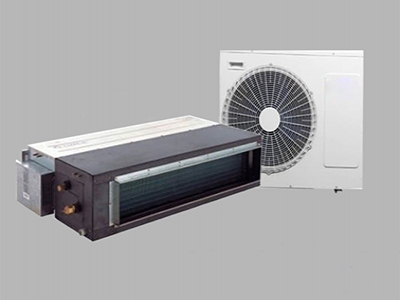
داکت اسپیلت از دو قسمت مجزا تشکیل شده است یونیت داخلی و یونیت بیرونی ،یونیت بیرونی که در فضای آزاد قرار می گیرد شبیه دستگاه کولر گازی می باشد با این تفاوت که به این دستگاه کانال متصل می شود و بادهی بیشتری دارد و فشار هوای خروجی آن بیشتر می باشد .یونیت خارجی از کمپرسور، کندانسور و یک موتور فن جهت خنک کردن کمپرسور تشکیل شده است یونیت داخلی که در داخل ساختمان به ویژه در سقف کاذب نصب می شود از یه اواپراتور یا سرد کننده یک عدد موتور فن برای جریان هوا و یک عدد کوئل آبگرم برای گرمایش در فصل پاییز و زمستان تشکیل شده است هم چنین داکت اسپیلت ها یک جز دیگری به نام لوله مویی و یا شیر انبساط دارند که گاهی در قسمت داخلی و گاهی هم در قسمت بیرونی قرار می گیرد یونیت داخلی و خارجی از طریق لوله مسی با یکدیگر متصل هستند و مایع مبرد در بین آن ها جریان دارد یونیت داخلی از طریق کانال هایی با اتاق ها در ارتباط می باشد و هوای سرد و گرم را به آن ها می رساند.گرمایش در داکت اسپیلت ها از طریق جریان آب گرم پکیج در کوئل آبگرم و با مصرف برق جزئی تامین می شود.
انواع داکت اسپیلت
داکت اسپیلت معمولی
در این دستگاه ها پس از رسیدن به دمای تظیمی کمپرسور خاموش می شود و در هربار روشن شدن نیاز به جریان برق مجدد دارد در نتیجه مصرف برق در این دستگاه ها نسبت به اینورتر بیشتر می باشد.
داکت اسپیلت اینورتر
در داکت های اینورتر از دستگاه ها از کمپرسور هایی با دور متغییر استفاده می شود که همین امر مصرف برق را به حداقل می رساند و باعث بالا رفتن طول عمرمفید دستگاه می شود در این نوع دستگاه ها پس از رسیدن به دمای تنظیمی دستگاه خاموش نمی شود و دردور کند به کار خود ادامه می دهد. قیمت داکت های اینورتر بالاتر از داکت های معمولی می باشد.
مزایای داکت اسپیلت
معایب داکت اسپیلت
سطح صدای داکت اسپیلت
طراحی و اجرای نادرست داکت اسپیلت ها در پروژه ها عامل ایجاد صدا می باشد و خرابی دستگاه دلیل ایجاد صدا نیست محاسبات کانال ها و لوله ها و دریچه ها باید دقیق باشد، جریان هوا نباید از یه مقداری کمتر یا بیشتر باشد اگر بیشتر باشد باعث ایجاد صدا می شود و اگر کمتر باشد به بعضی اتاق ها سرما و گرما خوب منتقل نمی شود گاهی به دلیل ترس از نرسیدن سرما و گرما به اتاق ها فشارهوا را بیشتر در نظر می گیرند که همین مورد باعث ایجاد صدا می شود اگر کانال ها به درستی محاسبه شوند باعث ایجاد سرمایش و گرمایش یکنواخت در محیط می شوند.
مشکلات سرمایش و گرمایش یکنواخت
در صورتی که نیاز به یک اتاق با دمای 22 داشته باشیم و به یک اتاق با دمای 18 این امر به دلیل عدم امکان تنظیم مستقل دما برای هر اتاق میسر نمی باشد.و این یکی از معایب بزرگ استفاده از داکت اسپیلت می باشد.
و اگر فردی بخواهد سیستم گرمایش و سرمایش اتاق خود را خاموش کند باید دریچه ی اتاق را ببندد و این امر سبب از بین رفتن بالانس سیستم می شود و دما در اتاق های دیگر تغییر می کند و گاهی ممکن است باعث بروز صدا شود.
نصب داکت اسپیلت
پس از اجرای لوله های مسی بین یونیت داخلی و خارجی ، یونیت خارجی در فضای بیرون نصب می شود و سپس باد سرد یا گرم با گذر از یونیت داخلی و پس از تنظیم شدن دما از طریق کانال کشی به دورن ساختمان انتقال می یابد.

 English