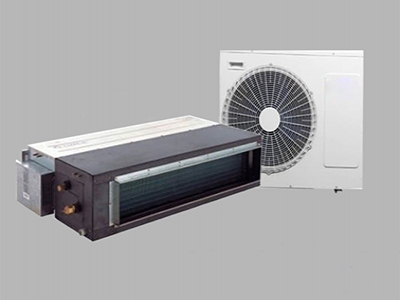
What is Duct Split?
Duct split device consists of two parts: indoor unit and outdoor unit. The outdoor unit, which is located in the open space, is similar to the gas cooler device, with the difference that it is connected to this duct and has more wind and its outlet air pressure. The outdoor unit consists of a compressor, a condenser and a fan motor to cool the compressor. The number of hot water coils is formed for heating in autumn and winter. Also, duct splits have another component called capillary tube or expansion valve, which is sometimes placed inside and sometimes outside. The indoor and outdoor unit is through Copper pipes are connected to each other and refrigerant flows between them. The indoor unit is connected to the rooms through ducts and delivers hot and cold air to them. Heating in duct splits through hot water flow. The package is supplied in a spa coil with partial power consumption.
Types of duct split:
Ordinary split duct
In these devices, after reaching the set temperature, the compressor turns off and each time it is turned on, it needs to be re-energized, so the power consumption in these devices is higher than the inverter.
Duct Split Inverter
Inverter ducts use variable speed compressors, which minimizes power consumption and increases the useful life of the device. In this type of device, the device does not turn off after reaching the set temperature. And continues to work slowly. The price of inverter ducts is higher than ordinary ducts.
Advantages of Duct Split
-
Lower price compared to other similar devices (chiller and fan coil)
-
Lack of occupation of useful space of the building due to built-in implementation
-
Provide air conditioning through the hot water coil, which requires the hot water required for heating by the package or the engine room and does not require the use of electricity, and due to the lower cost of gas than electricity, the costs of use are reduced.
-
Use a device to heat and cool the building instead of using several splits or heating devices
-
Inlet air filter inside the building
Disadvantages of Duct Split
Duct split sound level
Improper design and execution of duct splits in projects is the cause of noise and device failure is not the cause of noise. There is noise and if it is less, some rooms do not transfer heat and cold well. Sometimes, due to the fear of cold and heat reaching the rooms, more air pressure is considered, which causes noise if the channels are correct. Calculated to cause uniform cooling and heating in the environment.
Uniform cooling and heating problems
If we need a room with a temperature of 22 and a room with a temperature of 18, this is not possible due to the impossibility of independent temperature adjustment for each room. And this is one of the major disadvantages of using duct split.
And if a person wants to turn off the heating and cooling system of his room, he must close the door of the room, and this will cause the balance of the system to be lost, and the temperature in other rooms will change, and sometimes it may cause noise.
Install split duct
After the implementation of copper pipes between indoor and outdoor units, the outdoor unit is installed outdoors and then cold or hot wind is passed through the indoor unit and after the temperature is regulated, it is transferred to the inside of the building through ducts.